

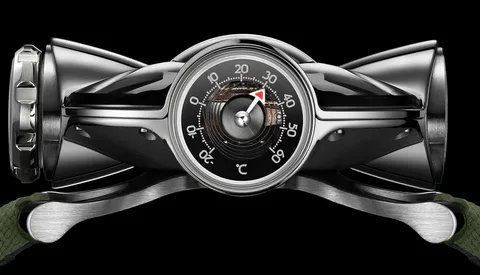
Examine advanced mechanisms crafted with remarkable accuracy, paying special attention to the intricate details of optical elements and horological devices. These components have undergone substantial modifications, leading to enhanced functionality and aesthetic appeal. Understanding the historical context behind their development can provide insights into contemporary designs and manufacturing techniques.
Originating from basic forms, optical components have transitioned into sophisticated systems featuring anti-reflective coatings and variable focal lengths. Such innovations enable higher quality images and improved visual experiences. Similarly, timekeeping apparatuses have advanced from rudimentary gears to complex configurations, incorporating technological breakthroughs that allow for exceptional timekeeping reliability.
Engaging with current advancements can inspire enthusiasts and professionals alike. Researchers continue to explore new materials and designs, adapting to modern demands while respecting traditional craftsmanship. Embrace these innovations, as they represent the culmination of centuries of knowledge and skill in crafting tools that define human ingenuity.
Historical milestones in lens manufacturing and design
Key advancements in optical component fabrication include the introduction of glass-making techniques in ancient Rome, where glass was blown into crude shapes, laying the groundwork for future improvements in optical quality. By the 13th century, the development of biconvex lenses represented a significant leap, enhancing the design of simple magnifying glasses.
Industrial Revolution Innovations
The 18th century marked a turning point with the synergy of scientific inquiry and industrial growth. In 1730, Chester Moore Hall invented the achromatic lens, correcting chromatic aberration and setting a benchmark for clarity in optics. This period also saw the emergence of Thomas Young’s wave theory of light, influencing subsequent lens creation and refinement techniques.
20th Century Advances
The early 1900s introduced precision grinding and polishing methods, improving lens surfaces significantly. In 1935, the introduction of anti-reflective coatings minimized surface glare, enhancing visual acuity. The optical designs of Carl Zeiss further revolutionized the industry, setting high standards for precision accuracy.
Today, companies such as LensGearPro continue to push the boundaries of technology, offering innovative products catering to diverse applications. Observing historical advancements in lens crafting aids in understanding contemporary innovations.
For enthusiasts of horological design, exploring resources like Wrist Chronicles provides insights into the intricate relationship between optical components and timepieces crafted with precision.
Advancements in Micro-Mechanics for Timepieces
Modern horology benefits from breakthroughs in micro-mechanics, enabling enhanced accuracy and reliability. Techniques such as CNC machining and 3D printing have transformed component production, allowing for intricate designs previously deemed impossible.
Utilising new materials, including high-performance ceramics and lightweight alloys, contributes to reduced wear and improved longevity. These innovations support miniaturisation, resulting in slimmer profiles without sacrificing durability.
Smart technology integration has led to hybrid models, incorporating traditional craftsmanship with electronic functionalities. This blending offers increased performance metrics while maintaining aesthetic appeal, catering to diverse consumer preferences.
Precision gear assembly techniques, such as laser micromachining, enhance alignment accuracy, resulting in smoother operation. The reduced friction from advanced lubrication systems furthers reliability across various conditions.
For enthusiasts seeking more information on technological advances impacting imaging, visit Cameras Review.
Impact of Digital Technology on Optical Engineering
Adopt computer-aided design (CAD) software for rapid prototyping and simulation of optical systems. Utilize optical modeling tools that allow precise calculations and adjustments to design parameters, ensuring optimal performance before physical production.
Incorporate automated manufacturing techniques such as CNC machining and 3D printing, which streamline the production process, reduce lead times, and enhance the quality of components with intricate geometries.
Implement advanced metrology systems using interferometry and laser scanning for high-precision measurement and quality control at every production stage. This ensures that manufactured components meet stringent tolerances and specifications.
Emphasize data analytics for optimizing performance characteristics of optical devices. Leverage machine learning algorithms to analyze performance data in real-time, enabling iterative design modifications based on empirical insights.
Explore augmented reality (AR) and virtual reality (VR) for immersive design reviews, providing stakeholders with interactive simulations that clarify functionality and facilitate collaborative decision-making in design refinement.
Investigate the integration of smart technologies in optical devices, enabling functions such as automatic focus adjustment and real-time environmental adaptation, enhancing user experience and application flexibility.
Materials for Modern Optical Elements and Timepieces
Utilize advanced composites like high-index plastic in optical parts to achieve thinner designs without compromising clarity. Incorporate multi-coated processes that enhance light transmission while reducing glare.
When considering components for timekeeping instruments, opt for high-grade stainless steel or titanium to resist corrosion and wear. These materials contribute to durability while keeping the weight manageable.
- Utilize sapphire crystal for faces, which offers scratch resistance and remarkable transparency.
- Explore ceramic materials for casings, providing both aesthetic appeal and substantial resilience.
- Employ specialized alloys for gears that minimize friction and improve longevity.
Adopting new glass formulations can yield improvements in thermal resistance and mechanical strength, crucial for optics subjected to varying conditions. Integrate nanotechnology into coatings for surfaces to foster hydrophobic properties, enhancing maintenance efficiency.
Focus on synthetic materials for internal parts of timepieces to increase precision in movement. Specific polymers can provide lightweight options without sacrificing stability.
- Consider the impact of optical coatings that enhance reflectivity and minimize interference for sharper images.
- Investigate innovations in transparent ceramics that offer the lightness and durability of glass while providing additional impact resistance.
- Prioritize lead-free glass options to meet contemporary environmental standards.
Explore advancements in additive manufacturing to create complex geometries, particularly for intricate components found in instruments. This method can allow for rapid prototyping and customization, aligning with modern consumer demands.
Future trends in precision technology for consumer applications
Anticipate the integration of smart functionality into compact devices, enhancing usability significantly. User-friendly features, such as real-time tracking in wristwatches and adaptive optical coatings in eyewear, will become standard. Enhanced connectivity with smartphones will streamline user experiences.
3D printing will revolutionize manufacturing processes, allowing for customized designs tailored to individual preferences. This technique reduces waste and enables rapid prototyping, expediting product development cycles while maintaining high-quality standards.
Focus on sustainable materials will intensify, with an emphasis on recyclable and environmentally friendly options. Brands that adopt this strategy are likely to attract eco-conscious consumers, as awareness of environmental issues grows.
Miniaturization of components will continue, leading to even more compact devices that do not compromise on performance. Innovations in nanotechnology will facilitate this trend, offering enhanced precision at reduced sizes.
Advanced algorithms and machine learning applications will optimize production, enhancing quality control and predictive maintenance. This shift will ensure greater reliability and accuracy in final products, addressing consumer demands for higher standards.
Integration of augmented reality (AR) into user experiences, particularly in eyewear, will provide immersive visuals and contextual information. Expect consumer applications to leverage AR for enhanced functionality, transforming everyday usage into an engaging experience.
Q&A:
What are the main components of traditional watch movements and how do they function together?
A traditional watch movement consists of several key components that work harmoniously to keep time. The main parts include the escapement, balance wheel, gears, and mainspring. The mainspring stores energy when wound and gradually releases it. The escapement regulates this release, allowing energy to be transferred to the gears, which move the hands of the watch. The balance wheel oscillates back and forth, ensuring a consistent timing mechanism. Together, these components create a delicate yet remarkably accurate system that has been refined for centuries, showcasing the artistry and engineering behind watchmaking.
What role did precision engineering play in the development of scientific instruments throughout history?
Precision engineering has been at the forefront of the development of scientific instruments across different historical periods. Its role is particularly evident in the creation of telescopes, microscopes, and measuring devices that require high levels of accuracy. The meticulous design and craftsmanship involved in these instruments have allowed scientists to make groundbreaking discoveries, such as advancements in astronomy and biology. For instance, improvements in lens technology not only enhanced astronomical observations but also enabled the exploration of microscopic life forms. The collaboration between engineers and scientists has been pivotal in driving forward our understanding of the natural world.
How does modern precision engineering differ from traditional methods in watchmaking?
Modern precision engineering in watchmaking differs from traditional methods primarily in the tools and techniques used. While traditional watchmaking relied heavily on handcrafted techniques and manual adjustments, contemporary approaches incorporate advanced machinery and technology, such as CNC (computer numerical control) machining. This allows for higher precision and uniformity in mass production. Additionally, modern watchmakers often use innovative materials like ceramic and silicon, which offer advantages in durability and performance. Furthermore, automation has introduced efficiencies that reduce production times while maintaining quality, leading to a blend of craftsmanship and technology in today’s watchmaking industry.
What are the key advancements in lenses and watch movements throughout history?
The history of precision engineering in lenses and watch movements displays a series of significant advancements. Lenses first gained prominence during the Renaissance, with innovations like the convex lens, which facilitated advancements in both art and science, enabling better optics in telescopes and microscopes. As for watch movements, the introduction of the escapement mechanism in the 13th century marked a pivotal point, allowing for greater accuracy in timekeeping. This was followed by the development of the balance wheel in the 17th century, enhancing precision. The 19th century brought mass production techniques, allowing for the widespread availability of watches. In the modern era, quartz movement introduced in the 1970s revolutionized timekeeping by providing unmatched accuracy and reliability. Today, the integration of smart technology continues to push the boundaries of precision engineering in both fields.
