

The Maras & Moray Tour – Half Day tour offers travelers a fascinating glimpse into the agricultural and scientific ingenuity of the Inca civilization, all within a convenient timeframe that fits perfectly into any Cusco itinerary. Located in the heart of Peru’s Sacred Valley, these two remarkable archaeological sites tell the story of an empire that mastered mountain agriculture through innovation and experimentation. The ancient salt mines of Maras, still harvested using traditional methods, contrast beautifully with the mysterious concentric terraces of Moray, creating a half-day adventure that combines history, culture, stunning landscapes, and insights into pre-Columbian agricultural science.
Discovering Moray: The Inca Agricultural Laboratory
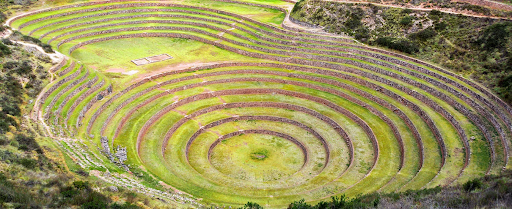
Moray stands as one of the most enigmatic and visually striking archaeological sites in the Sacred Valley. Consisting of three main amphitheater-like depressions carved into the mountainside, these circular terraces descend up to 150 meters (492 feet) into the earth, creating what agricultural scientists now believe was an advanced agricultural research station. The largest of these formations features concentric rings that create multiple microclimates, with temperature variations of up to 15 degrees Celsius between the top and bottom levels.
The Inca engineers designed Moray with remarkable precision. Each terrace level represents a different agricultural zone found throughout the empire, from coastal regions to high-altitude environments. This ingenious design allowed Inca agricultural specialists to experiment with crop varieties, test adaptation strategies, and develop seeds that could thrive in diverse ecological conditions. By replicating various climate zones in a single location, the Incas could accelerate their understanding of plant behavior without traveling thousands of kilometers across their vast empire.
The geometric perfection of Moray’s terraces demonstrates sophisticated knowledge of mathematics, astronomy, and hydrology. A complex irrigation system once supplied water to each level, and drainage systems prevented flooding during the rainy season. The terraces themselves were constructed with multiple layers of materials including gravel, sand, and fertile soil, ensuring proper drainage and temperature regulation for experimental crops. Modern agricultural scientists visiting Moray continue to be impressed by the advanced understanding of agricultural principles the Incas possessed over 500 years ago.
Walking through Moray provides a profound appreciation for Inca scientific methodology. Visitors can descend into the bowls, experiencing the temperature changes firsthand and imagining the agricultural specialists who once tended experimental plots of potatoes, quinoa, corn, and other Andean crops. The site’s remote location adds to its mystique, surrounded by snow-capped peaks and rolling agricultural landscapes where local Quechua communities still farm using traditional methods passed down through generations.
The Salt Mines of Maras: White Gold of the Andes
Just a short distance from Moray lies Maras, locally known as Salineras de Maras, a breathtaking landscape of over 3,000 salt evaporation pools cascading down the mountainside in a patchwork of cream and white terraces. Fed by a natural underground stream that emerges heavily saturated with salt from the Qoricocha spring, these salt pans have been continuously harvested since pre-Inca times, making them one of the oldest operating salt mines in South America.
The brilliant white and gold hues of the salt pools create a stunning visual contrast against the green valley and blue Andean sky. Each pool, measuring approximately 5 square meters, is individually owned by families from the nearby village of Maras, who have maintained hereditary rights to specific pans for centuries. The traditional harvesting process remains unchanged: mineral-rich spring water flows through ancient channels into the pools, where it evaporates under the intense mountain sun, leaving behind crystallized pink salt rich in minerals including magnesium, calcium, and iron.
The harvesting cycle follows a precise rhythm tied to the dry season. Workers carefully scrape the crystallized salt from the pool bottoms every month, collecting approximately 150 kilograms per pool during peak harvest periods. The resulting Maras pink salt has gained international recognition for its unique mineral composition and subtle flavor profile, now featured in gourmet restaurants worldwide and sought after by culinary enthusiasts who appreciate its distinctive characteristics.
Walking along the narrow pathways between the salt pools offers an immersive experience in living history. The channels and pools represent a continuous tradition spanning at least 2,000 years, with techniques refined through countless generations. Local workers, often wearing traditional Andean clothing, can sometimes be seen tending the pools, scraping salt, or adjusting water flows living representatives of a cultural practice that connects the present directly to the ancient past.
The Half-Day Tour Experience
Most Maras and Moray half-day tours operate in the morning or afternoon, allowing travelers to combine this excursion with other activities or rest periods. The journey from Cusco typically takes 45 minutes to an hour, following the road toward the Sacred Valley and climbing into the highland areas above the Urubamba River. The route itself offers spectacular views of terraced hillsides, small Andean villages, and glimpses of daily life in rural Peru.
Professional tour guides provide essential context that transforms these sites from interesting landscapes into windows into Inca civilization. Guides explain the scientific principles behind Moray’s design, the significance of agricultural experimentation to the empire’s expansion, and the continuing economic importance of the Maras salt mines to local communities. Many guides also share insights into Quechua culture, traditional agricultural practices still used in the region, and the spiritual significance these sites held and continue to hold for indigenous communities.
The typical itinerary begins at Moray, where visitors spend approximately 45 minutes to an hour exploring the terraces, photographing the geometric formations, and learning about Inca agricultural science. From this elevated position, panoramic views extend across the Sacred Valley to surrounding peaks, providing excellent photography opportunities. The descent into the terraces allows visitors to experience the temperature gradients and appreciate the scale of this ancient research facility.
After Moray, the tour continues to the Maras salt mines, situated at a lower elevation where the warmer temperatures facilitate salt evaporation. Here, visitors follow paths along the edges of the pools, careful not to disturb active harvesting areas. The shimmering salt crystals and geometric patterns created by thousands of individual pools create an almost surreal landscape that many travelers rank among their most memorable Peruvian experiences. A small market near the entrance offers opportunities to purchase authentic Maras salt directly from local producers, supporting the families who maintain this ancient tradition.
Choosing Between Tour Options
Several variations of the Maras and Moray tour accommodate different interests and physical abilities. Standard vehicle tours provide comfortable transportation with minimal walking, suitable for families with young children or travelers with mobility concerns. More adventurous options incorporate mountain biking, beginning at high altitudes and descending through the sites with opportunities to stop for photography and exploration. Some premium tours include visits to nearby traditional weaving communities or agricultural villages, providing deeper cultural immersion.
The half-day format makes this tour particularly versatile. Morning tours allow travelers to enjoy the sites during optimal lighting conditions for photography and return to Cusco for afternoon activities. Afternoon tours work well for those who prefer leisurely mornings or have morning commitments in Cusco. The compact timeframe means this tour can be combined with other Sacred Valley attractions like Chinchero, Ollantaytambo, or Pisac on full-day itineraries, creating comprehensive explorations of the region.
Practical Considerations for Your Visit
Weather in the Sacred Valley varies by season, with the dry months from May through September offering the most reliable conditions. During these months, clear skies and moderate temperatures create ideal touring conditions, though the sites remain accessible and impressive year-round. The rainy season from November through March brings lush green landscapes and fewer tourists, though afternoon showers are common and can make pathways slippery.
Appropriate clothing includes comfortable walking shoes with good traction, as paths around both sites can be uneven. The high-altitude sun is intense, making sun protection essential: high-SPF sunscreen, a wide-brimmed hat, and quality sunglasses protect against UV exposure. Layers are advisable, as temperatures can vary throughout the day, and wind at Moray can be brisk even on warm days.
Camera equipment should be readily accessible, as both sites offer extraordinary photography opportunities. The geometric patterns of Moray’s terraces and the mosaic-like appearance of Maras salt pools create visually compelling images in various lighting conditions. Respectful photography practices include asking permission before photographing local workers and avoiding stepping into active salt pools.
Cultural and Economic Impact
Tourism to Maras & Moray Tour – Half Day tour provides crucial economic benefits to local communities while presenting challenges related to preservation and cultural integrity. Entrance fees contribute to site maintenance and community development projects, while direct purchases of salt and handicrafts from local vendors support traditional livelihoods. Responsible tour operators emphasize sustainable practices, limit group sizes to reduce environmental impact, and educate visitors about the cultural significance of these sites.
The continued operation of the Maras salt mines demonstrates successful integration of tourism and traditional economic activities. Unlike many historical sites that exist purely as tourist attractions, Maras remains a working production facility where ancient techniques generate modern livelihoods. This living heritage aspect adds authenticity to the visitor experience while ensuring that traditional knowledge passes to new generations.
Conclusion
The Maras and Moray half-day tour delivers remarkable value for travelers seeking to understand the sophistication of Inca civilization beyond the famous ruins of Machu Picchu. These sites reveal the scientific and economic foundations that supported one of history’s greatest empires, showcasing agricultural innovation and resource management that remain relevant to contemporary discussions about sustainable farming and food security. The convenience of a half-day format makes this tour accessible to travelers with limited time while providing unforgettable experiences in stunning natural settings. Whether you’re fascinated by ancient engineering, drawn to unique landscapes, or seeking authentic cultural encounters, Maras and Moray offer compelling reasons to venture into the Sacred Valley’s highlands, where past and present merge in remarkable ways.
Frequently Asked Questions (FAQ)
Q: How long does the Maras and Moray half-day tour take?
A: The complete tour typically lasts 4-5 hours including round-trip transportation from Cusco. Approximately 45 minutes is spent at Moray and 45-60 minutes at Maras, with about 1.5 hours of total driving time. Morning tours usually run from 8:00 AM to 1:00 PM, while afternoon tours operate from 1:00 PM to 6:00 PM. This compact timeframe makes it easy to combine with other Cusco activities or dedicate the remainder of your day to rest and acclimatization.
Q: What is the best time of day to visit Maras and Moray?
A: Morning tours (8:00 AM start) offer the best photography lighting, with soft morning sun illuminating the salt pools beautifully and creating dramatic shadows in Moray’s terraces. Mornings also tend to be less crowded and cooler, which is comfortable for walking. Afternoon tours work well if you prefer sleeping in or have morning commitments, though lighting can be harsher for photos. During rainy season (November-March), mornings generally have clearer weather before afternoon showers arrive.
Q: How much does the Maras and Moray tour cost?
A: Group tours typically range from $20-40 USD per person, including transportation and English-speaking guide. The Partial Tourist Ticket (Boleto Turístico Parcial) costs an additional 70 soles ($18-20 USD) and covers entrance to both sites plus other Sacred Valley attractions. Private tours cost $80-150 USD depending on group size and inclusions. Mountain biking variations cost $50-80 USD. Prices usually don’t include entrance fees, meals, or tips. Budget operators may offer cheaper rates but might compromise on guide quality or vehicle comfort.
Q: Is the Maras and Moray tour suitable for children and elderly visitors?
A: Yes, the standard vehicle tour is accessible for most ages and fitness levels. Walking is minimal and optional you can view Moray’s terraces from the rim without descending, and Maras can be appreciated from designated walkways. However, paths can be uneven and slippery, so sturdy footwear is essential. Children usually find the salt mines fascinating, and the short duration prevents fatigue. For visitors with significant mobility issues, inform your tour operator in advance; private tours can be customized to minimize walking. The altitude (Moray is at 3,500m/11,483ft) may affect some visitors, so spend 1-2 days in Cusco first to acclimatize.
Q: Can I buy salt at Maras, and is it worth it?
A: Absolutely! Local vendors sell authentic Maras pink salt at the entrance and in small shops near the salt pools. Prices are reasonable, typically 5-10 soles ($1.50-3 USD) for small bags. The salt is naturally pink due to mineral content and is considered gourmet quality, used by high-end restaurants worldwide. Buying directly from producers ensures authenticity and supports local families who maintain the traditional harvesting methods. It makes an excellent, practical souvenir that’s both unique and useful. Larger quantities are available if you want to stock up or give as gifts.
Q: What should I wear and bring for the Maras and Moray tour?
A: Wear comfortable walking shoes with good traction, as paths can be uneven and occasionally muddy. Dress in layers since temperatures vary throughout the day a light jacket, long pants, and a breathable shirt work well. Essential items include: high-SPF sunscreen (mountain sun is intense), wide-brimmed hat, sunglasses, camera with extra batteries/memory, water bottle (1-2 liters), and small bills for purchasing salt or handicrafts. During rainy season (November-March), bring a waterproof jacket. Don’t forget the Partial Tourist Ticket or cash (soles) to purchase it at the entrance.
Q: Can this tour be combined with other Sacred Valley attractions?
A: Yes, Maras and Moray are frequently combined with other Sacred Valley sites for full-day tours. Popular combinations include Chinchero (traditional weaving village), Ollantaytambo (impressive Inca fortress), and Pisac (ruins and artisan market). Many tour operators offer “Sacred Valley Full Day” tours that include Moray, Maras, and 2-3 additional sites. You can also arrange private tours customized to your interests and pace. If you’re particularly interested in Inca agriculture, combining this with a visit to Chinchero’s agricultural terraces creates a comprehensive thematic experience.
Q: Is Moray really an agricultural laboratory or is that just speculation?
A: While direct written records from the Incas don’t exist (they used quipus rather than written language), substantial archaeological and agricultural evidence supports the agricultural laboratory theory. The site’s design features precise temperature gradients matching different ecological zones throughout the empire, sophisticated irrigation and drainage systems, and soil composition variations consistent with experimental agriculture. Contemporary agricultural scientists studying the site have confirmed that the microclimate differences would indeed allow crop experimentation. Andean oral traditions also reference Moray’s agricultural significance. While we can’t be 100% certain of every detail, the preponderance of evidence strongly indicates Moray served agricultural research purposes rather than purely ceremonial functions.
