

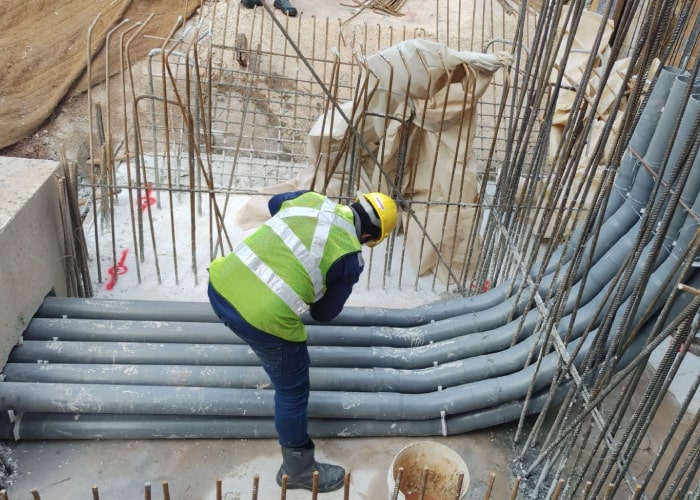
Singapore’s rapid urban development and growing infrastructure needs have placed increasing pressure on underground utilities. With limited land space and highly dense urban environments, traditional construction methods are often disruptive and inefficient. As a result, modern underground pipe laying techniques have become essential in supporting sustainable growth, minimising surface disruption, and ensuring long-term infrastructure resilience within civil engineering in Singapore.
What Is Underground Pipe Laying in Civil Engineering?
Underground pipe laying refers to the installation of utility pipelines beneath the ground to support essential services such as water supply, sewerage, gas distribution, and telecommunications. These pipelines form the backbone of urban infrastructure, enabling cities to function efficiently while keeping surface spaces clear. Compared to traditional open-cut excavation methods, modern underground pipe laying approaches focus on precision, safety, and reduced environmental impact.
Trenchless Technology Advancements
One of the most significant innovations in underground pipe laying is the adoption of trenchless technologies such as Horizontal Directional Drilling (HDD). HDD allows pipelines to be installed beneath roads, buildings, and waterways without extensive surface excavation. This method significantly reduces traffic disruption, shortens project timelines, and minimises damage to surrounding infrastructure, making it ideal for Singapore’s congested urban areas.
Microtunneling and Pipe Jacking Techniques
Microtunneling and pipe jacking are advanced methods used for high-precision underground excavation. These techniques are particularly suitable for deep installations and projects requiring tight alignment control. By using remotely controlled machinery, contractors can achieve accurate pipe placement while maintaining ground stability. This makes microtunneling a preferred solution for complex underground pipe laying projects in civil engineering in Singapore.
Use of Smart Materials and Prefabricated Pipes
Modern underground pipe laying increasingly relies on smart materials and prefabricated pipe systems. Materials such as HDPE and corrosion-resistant composites offer enhanced durability, longer service life, and reduced maintenance requirements. Prefabricated pipes also improve installation efficiency and quality control, ensuring consistent performance even in challenging underground conditions.
Digital Monitoring and Construction Automation
Digital technologies have transformed underground pipe laying by enabling real-time monitoring and automation. Advanced sensors and alignment systems allow engineers to track pipe positioning, detect deviations, and address issues immediately during installation. These innovations enhance accuracy, improve worker safety, and reduce the risk of costly rework in complex civil engineering projects.
Sustainability and Urban Impact Reduction
Sustainability is a key driver behind modern underground pipe-laying methods. By reducing excavation, these techniques lower carbon emissions, minimise noise and dust, and preserve existing landscapes. Minimal disruption to traffic and nearby communities also supports better urban liveability, aligning with Singapore’s long-term sustainability and smart city goals.
Building the Future Beneath Singapore’s Cities
Modern innovations in underground pipe laying are reshaping how infrastructure is developed in Singapore. By embracing advanced techniques, smart materials, and digital technologies, civil engineering projects can achieve greater efficiency, safety, and sustainability.
Partner with Lih Ming for expertly executed underground pipe laying solutions that meet Singapore’s evolving infrastructure demands. Contact our team today to discuss how we can support your next civil engineering project with reliable, future-ready solutions.
