

Types of Solar Power Installation Systems: On-Grid, Off-Grid & Hybrid
The demand for solar energy is rising steadily as homeowners and businesses look for cleaner, more cost-effective power solutions. With increasing electricity costs and growing sustainability awareness, solar energy has become a practical long-term investment. However, choosing the right solar power installation system is just as important as deciding to go solar.
There are three main types of solar solutions available today: on-grid, off-grid, and hybrid systems. Each serves different energy needs, budgets, and lifestyles. Understanding how these systems work will help you select the most suitable option for your property and maximise the benefits of solar energy.
What Is Solar Power Installation for Homes?
A solar power installation for homes consists of several key components working together to generate electricity from sunlight. These typically include solar panels, inverters, mounting structures, and optional battery storage systems.
The role of solar panels for home use is to capture sunlight and convert it into direct current (DC) electricity. This electricity is then transformed into alternating current (AC) by an inverter, making it suitable for household appliances. Proper system design and professional installation are essential to ensure optimal energy production, electrical safety, and long-term performance.
On-Grid Solar Power Installation
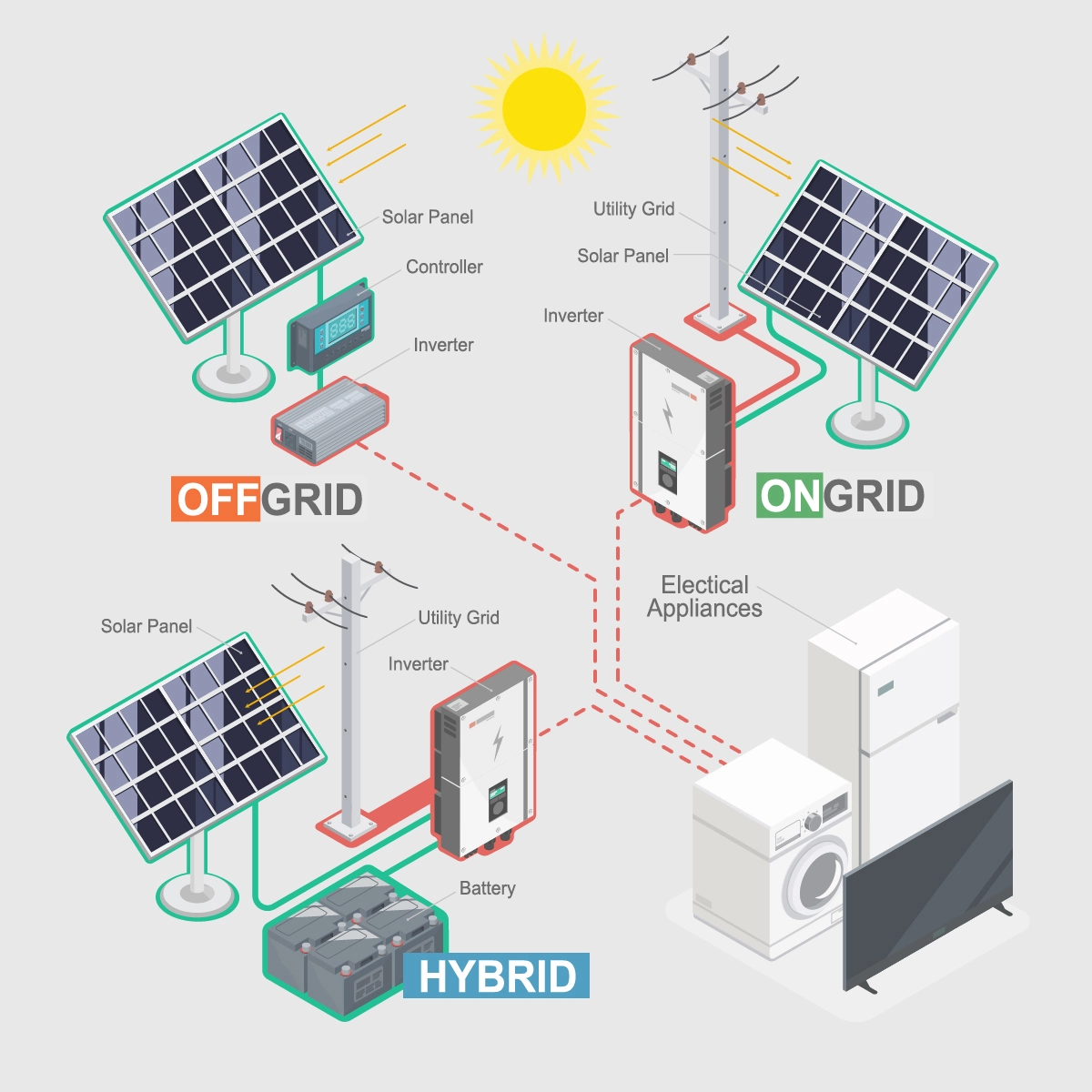
An on-grid solar power installation is connected directly to the main electricity grid. During the day, solar panels generate power that supplies your home’s energy needs first. Any excess electricity produced is exported back to the grid, while additional power can be drawn from the grid when solar generation is insufficient.
One of the main advantages of on-grid systems is their lower upfront cost, as they do not require battery storage. Homeowners also benefit from net metering or grid compensation schemes, which help reduce monthly electricity bills. This type of system is ideal for residential solar panels for home installations in urban areas with stable grid access.
Off-Grid Solar Power Installation
An off-grid solar power installation operates independently from the main electricity grid. These systems rely entirely on solar panels and battery storage to supply power, making them suitable for remote properties or locations prone to power outages.
The primary benefit of off-grid systems is complete energy independence. Homeowners are not affected by grid failures or rising electricity tariffs. However, off-grid systems require larger battery banks and careful energy planning, resulting in higher upfront costs and ongoing maintenance requirements. They are best suited for homes where grid connection is unavailable or unreliable.
Hybrid Solar Power Installation
A hybrid solar power installation combines the advantages of both on-grid and off-grid systems. It connects to the main electricity grid while also incorporating battery storage. This allows homeowners to store excess solar energy for use during the night or power outages, while still benefiting from grid support when needed.
Hybrid systems offer flexibility, energy optimisation, and backup power security. As battery technology improves and becomes more affordable, hybrid systems are gaining popularity among modern homeowners who want reliability without fully disconnecting from the grid. They are especially suitable for households seeking maximum control over energy usage.
Choosing the Right Solar System for Your Home
Selecting the right solar power installation depends on several important factors. Budget is often the first consideration, as on-grid systems are typically more affordable, while off-grid and hybrid systems require higher initial investment.
Energy consumption patterns also play a key role. Homes with higher electricity usage or a need for backup power may benefit more from hybrid or off-grid solutions. Roof size, orientation, and sunlight exposure determine how many solar panels for home use can be installed efficiently.
Consulting solar professionals ensures accurate system sizing, proper equipment selection, and realistic projections of long-term savings. With the right guidance, homeowners can enjoy lower electricity bills, a reduced carbon footprint, and an excellent return on investment over the lifespan of their solar system.
Make the Switch to Solar with Confidence and Expert Guidance
Understanding the differences between on-grid, off-grid, and hybrid systems is essential when planning a solar power installation. Each option offers unique advantages, from cost savings and simplicity to energy independence and backup power.
By choosing the right system and investing in quality solar panels for the home, homeowners can enjoy reliable, sustainable energy for years to come. Consulting an experienced solar professional like MVM Roofing ensures your system is designed for efficiency, safety, and long-term value — helping you make the most of your transition to clean, renewable power.
